Wine & Beer Clarification: Producing Fine-Micron Filter Cartridges
Introduction
The quality of wine and beer depends not only on carefully selected ingredients and precise fermentation but also on effective clarification and filtration. Consumers expect beverages that are bright, visually appealing, microbiologically stable, and consistent in flavor. To achieve these expectations, wineries and breweries rely on high-performance fine-micron filter cartridges during the final stages of production.
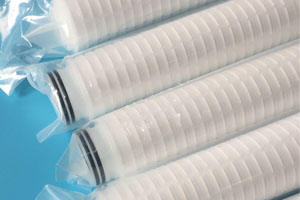
Fine-micron filter cartridges are designed to remove yeast, bacteria, suspended solids, haze particles, and other contaminants while preserving the beverage's original taste, aroma, and color. Manufacturing these cartridges requires advanced filtration materials, precision pleating technology, reliable welding processes, and strict quality control.
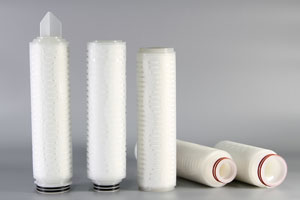
This article explores how fine-micron filter cartridges are produced, the materials involved, manufacturing technologies, quality testing procedures, and why high-quality production equipment is essential for the beverage filtration industry.
Why Fine-Micron Filtration Matters
Clarification is one of the most critical steps in beverage production. Even after fermentation and settling, beverages still contain microscopic particles that can affect appearance, shelf life, and product stability.
Fine-micron filtration offers several important benefits:
- Produces crystal-clear wine and beer
- Removes yeast and microorganisms
- Extends product shelf life
- Prevents sediment formation during storage
- Improves product consistency
- Reduces spoilage risks
- Supports cold sterilization without heat treatment
Depending on the beverage and production process, common filtration ratings include:
- 5 micron – coarse clarification
- 1 micron – fine clarification
- 0.65 micron – yeast reduction
- 0.45 micron – microbial control
- 0.2 micron – sterile filtration before bottling
Selecting the correct micron rating depends on the desired filtration efficiency while maintaining beverage flavor characteristics.
Filter Media Selection
The heart of every fine-micron filter cartridge is its filtration media. The media determines particle retention, flow rate, dirt-holding capacity, and filtration efficiency.
Common materials include:
Polyethersulfone (PES)
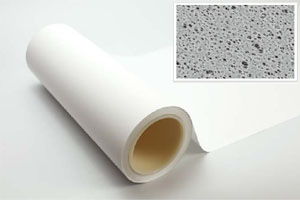
PES membranes provide:
- Excellent flow rates
- Low protein binding
- High microbial retention
- Wide chemical compatibility
- Low extractables
PES is widely used for sterile filtration in wineries and breweries.
Polypropylene (PP)
PP depth media offers:
- High dirt-holding capacity
- Excellent chemical resistance
- Low cost
- Wide compatibility
It is commonly used during pre-filtration before membrane filtration.
Glass Fiber
Glass fiber media provides:
- High contaminant loading
- Excellent clarification performance
- Effective removal of haze particles
Often used as a pre-filter.
Nylon Membrane
Nylon provides:
- High mechanical strength
- Excellent compatibility with alcoholic beverages
- Good filtration accuracy
Pleating Technology
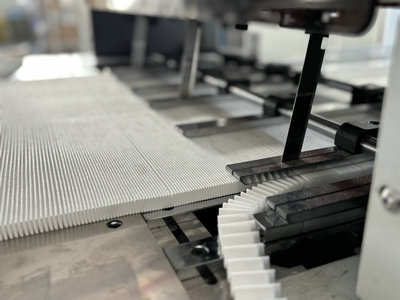
Pleating increases the effective filtration area inside the cartridge.
More filtration area means:
- Lower pressure drop
- Longer service life
- Higher flow capacity
- Reduced operating costs
Modern pleating machines produce:
- Uniform pleat spacing
- Stable pleat geometry
- High pleat density
- Excellent media support
Automatic pleating equipment ensures every cartridge maintains consistent filtration performance throughout production.
Precision Cutting
After pleating, the filter media is cut to exact dimensions.
Precision cutting is essential because inaccurate dimensions may cause:
- Improper sealing
- Poor welding quality
- Uneven pleats
- Reduced filtration efficiency
Automatic cutting systems use programmable controls to achieve repeatable lengths with minimal tolerance variation.
Seam Welding
The pleated media must be joined into a cylindrical element.

Several joining technologies are available:
- Thermal welding
- Ultrasonic welding
- Infrared welding
The welded seam must provide:
- High mechanical strength
- Complete sealing
- No bypass leakage
- Smooth internal surface
Consistent seam quality is critical for maintaining filtration integrity.
End Cap Assembly
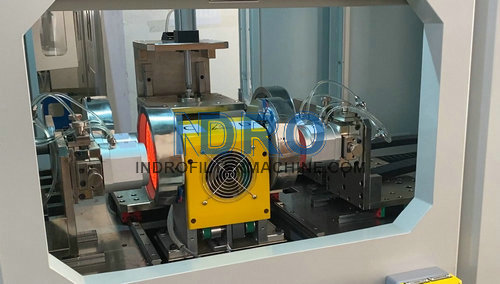
The filter element is then assembled with plastic end caps.
Common end cap materials include:
- Polypropylene
- Glass-filled polypropylene
- Nylon
- PVDF
The connection between media and end caps must be completely sealed to prevent fluid bypass.
Poor welding may result in:
- Leakage
- Particle bypass
- Reduced filtration efficiency
- Premature cartridge failure
Advanced Infrared Welding Technology
One of the most important developments in filter cartridge manufacturing is advanced infrared welding.
Compared with conventional hot plate heating, modern infrared welding offers numerous advantages:
- Non-contact heating
- Uniform heat distribution
- Reduced material deformation
- Cleaner weld surfaces
- Improved production consistency
- Higher welding strength
- Better cosmetic appearance
The latest infrared heating systems equipped with water-cooling technology further improve temperature stability and production repeatability.
This advanced design minimizes overheating, prevents material sticking, and delivers superior welding quality, making it an excellent solution for manufacturing premium pleated filter cartridges used in demanding food and beverage applications.
Integrity of the Filter Structure
Every component inside the cartridge contributes to overall performance.
Key structural components include:
- Filter media
- Inner support core
- Outer cage
- End caps
- Adapter
- Seal rings
Proper alignment during assembly ensures:
- Uniform fluid distribution
- High burst strength
- Low pressure loss
- Long operating life
Automated assembly systems significantly improve consistency compared with manual production.
Quality Control During Manufacturing
High-quality filter cartridges undergo multiple inspections throughout production.
Typical quality control procedures include:
Visual Inspection
Operators inspect:
- Pleat uniformity
- Welding quality
- Surface cleanliness
- Component alignment
Dimensional Inspection
Measurements verify:
- Cartridge length
- Outside diameter
- Inside diameter
- End cap dimensions
Bubble Point Testing
Bubble point testing confirms membrane integrity and verifies pore size consistency.
Pressure Holding Test
Pressure testing confirms:
- Seal integrity
- Structural strength
- Leak-free assembly
Flow Rate Testing
Flow testing verifies that each cartridge achieves the required throughput while maintaining filtration efficiency.
Particle Retention Testing
Standardized testing confirms the cartridge meets its rated micron performance.
Hygienic Manufacturing Environment
Filter cartridges used for wine and beer must be produced in clean manufacturing environments.
Good manufacturing practices include:
- Clean assembly areas
- Dust control
- Operator hygiene
- Controlled packaging
- Product traceability
Many manufacturers also implement ISO quality management systems to ensure consistent production standards.
Applications in the Beverage Industry
Fine-micron filter cartridges are widely used throughout beverage production.
Typical applications include:
Wine Production
- Final clarification
- Cold stabilization
- Bottling filtration
- Sterile filtration
Beer Production
- Yeast removal
- Bright beer filtration
- Final packaging
- Microbial stabilization
Craft Breweries
Craft breweries increasingly use fine-micron cartridges because they provide excellent product consistency while preserving the unique characteristics of specialty beers.
Beverage Manufacturing
They are also used for:
- Cider
- Fruit wine
- Kombucha
- Distilled spirits
- Mineral water
- Soft drinks
Choosing High-Quality Manufacturing Equipment
Producing premium filter cartridges requires reliable manufacturing equipment at every production stage.
An efficient production line typically includes:
- Automatic pleating machine
- Precision cutter
- Center seam welding machine
- Infrared end cap welding machine
- Adapter welding machine
- Testing equipment
- Packaging station
Automation improves:
- Production efficiency
- Product consistency
- Labor savings
- Process repeatability
- Overall manufacturing quality
Investing in advanced production technology enables manufacturers to produce cartridges that meet increasingly strict food and beverage industry requirements.
Conclusion
Wine and beer clarification is much more than simply removing visible particles. It is a carefully engineered process that protects product quality, preserves flavor, enhances appearance, and ensures microbiological stability.
Producing high-performance fine-micron filter cartridges requires premium filtration materials, precision pleating, accurate cutting, reliable seam welding, advanced infrared end cap welding, and rigorous quality testing. Every manufacturing step directly influences the cartridge's final performance.
As beverage producers continue to demand higher efficiency, longer service life, and stricter hygiene standards, modern automated manufacturing equipment has become essential for producing world-class filtration products. Companies that invest in advanced production technologies can consistently manufacture fine-micron filter cartridges that deliver exceptional clarification performance, helping wineries and breweries produce beverages that meet the highest quality standards while satisfying consumer expectations worldwide.